Why Onboarding a New Crew Member Takes Around 18 Hours and How to Cut It Down

The main cost of a new hire is the experienced staff time spent teaching them where everything is. The paperwork is a small part of it.
Onboarding a single new crew member averages around 18 hours across the superintendents and turf managers we hear from. Very little of that is classroom time or HR forms. Most of it is your assistant, your equipment manager, and your best veteran riding along with the new hire, walking the property, and answering the same questions they answered for the last three hires.
Eighteen hours per person adds up fast when you are staffing up for the season or replacing seasonal turnover. And most of those hours go to the one thing that is hardest to write down: where everything is and how this specific course actually runs.
Key takeaways
- Onboarding a new crew member averages around 18 hours, most of it experienced-staff time spent showing rather than telling.
- 87% of operations lack a reliable system to document and reference past work, so new hires learn by asking instead of looking it up.
- 40% say they would lose a quarter or more of their operational knowledge if one key person left, which means much of onboarding is just verbal knowledge transfer.
- 47% report that more than three quarters of daily communication is informal, so newcomers have to absorb an unwritten system by osmosis.
- Mapping and finding infrastructure (valves, irrigation lines and heads, quick couplers) is the single most common frustration, and it is exactly what takes longest to teach.
How long does it really take to onboard a new crew member?
Onboarding a new crew member averages around 18 hours, and almost all of that is hands-on time from people who already know the course.
Onboarding here means everything between a new hire’s first day and the point where they can run a normal task list without supervision. It covers shadowing, repeated explanations, and the slow process of learning a property they have never set foot on.
The number is high because the teaching is one-to-one. You cannot hand someone a binder and have them know which valve feeds the seventh green or why the back nine drains the way it does. So a seasoned crew member spends the time instead, and that is time pulled straight off the schedule.
Why does onboarding eat so much of your experienced staff’s time?
Because the course mostly lives in people’s heads, so the only way to transfer it is to have an experienced person talk through it in person.
When 87% of operations have no reliable way to document and reference past work, there is nothing for a new hire to read. Two thirds rely on memory, paper, or no system at all. That puts the entire burden of orientation on whoever knows the most, and that person is usually the one you can least afford to pull off their own work.
It compounds with communication habits. With 47% of operations running more than three quarters of their daily communication informally, through group chats, the radio, or word of mouth, a newcomer cannot just look up how things are done. They have to be told, often more than once, and usually in the middle of a busy morning. When the course only lives in people’s heads, every new hire pays the tribal knowledge tax.
What makes the number worse?
Undocumented infrastructure makes the number worse. If nobody can point a new hire to where the valves and lines are, they learn it the slow way, by being walked to every one of them.
Mapping and finding infrastructure came up as the most common frustration in the field: locating valves, mapping irrigation lines and heads, getting the course documented all the way down to quick couplers. These are the things a new crew member needs to know and the things that are almost never written down.
There is a knowledge-concentration problem layered on top. 40% of operations say they would lose a quarter or more of their operational knowledge if a single key person left. When that much detail sits with one or two people, onboarding becomes a person-to-person handoff, and it only happens when those specific people have time.
The result is predictable. The same questions get asked every season, the same walk-arounds happen every spring, and the eighteen hours repeat with every new hire.
How do you cut onboarding time down?
Document the course once so new hires can look things up instead of asking, and the eighteen hours starts to drop.
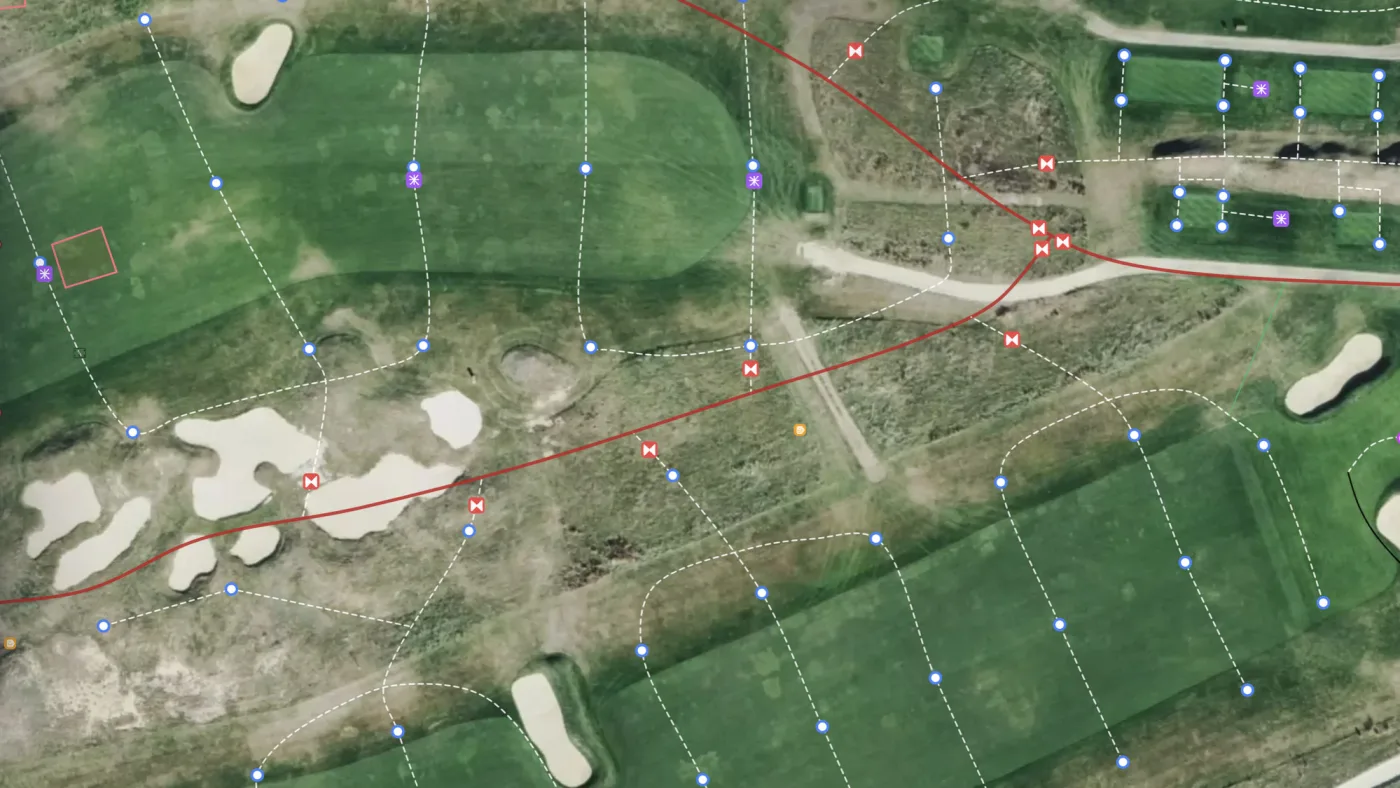
Start with the map. A current as-built map lets a new hire see where the valves, heads, lines, and quick couplers are instead of memorizing them off someone’s narration, which replaces most of the shadowing time. That alone cuts into the biggest time sink.
Then write down the standards that usually travel by word of mouth: mowing heights, rotation, the quirks of specific holes, the work you already did and why. When that lives somewhere searchable, a newcomer answers their own questions and your veteran stays on task.
You will not get to zero. Some things have to be shown. But if you move even half of the verbal transfer onto a shared, documented system, an experienced crew member loses a morning per hire instead of two full days. Across the superintendents Turfile surveyed, onboarding averaged around 18 hours per new hire, and the operations that document the course are the ones who get that number down.
Frequently asked questions
How many hours does it take to onboard a new golf course crew member? Onboarding a new crew member averages around 18 hours, most of it experienced-staff time spent walking the property and answering questions rather than formal training.
Why does onboarding take so long on a golf course? Onboarding takes so long because the course usually exists only in people’s heads, with 87% of operations lacking a reliable system to document and reference past work, so new hires have to be shown everything in person.
What is the fastest way to reduce onboarding time? The fastest way to reduce onboarding time is to maintain a current as-built map and written standards so new hires can look up where infrastructure is and how the course runs instead of relying on a veteran’s narration.
What does “onboarding” mean for a turf crew? For a turf crew, onboarding is the full stretch from a new hire’s first day to the point where they can run a normal task list without supervision, including learning where all the infrastructure is.
These figures come from an ongoing Turfile survey of golf course superintendents and turf managers. Responses are self-reported, so treat them as signals from the field rather than a formal study.
When the course is documented and mapped in one place, onboarding takes a quick orientation instead of hours of your best people’s time, which is the gap Turfile is built to close.