The State of Course Management 2026: The Hidden Cost of Lost Information

Turfile asked working superintendents and turf managers where their time really goes. Here’s what they told us about the information that slips through the cracks.
Almost 9 in 10 golf course operations don’t have a reliable way to document and reference their own past work. Only about 1 in 8 said they could. The rest are running on memory, paper, and group chats, and it’s quietly costing them time, money, and knowledge they can’t get back. We pulled together what superintendents told us about the inefficiencies hiding in their day, and a few of the numbers are hard to ignore.
Key findings
- 87% don’t have a reliable system to document and reference past work. Only 13% do.
- 40% say they’d lose a quarter or more of their operational knowledge if one key person left tomorrow.
- 47% say more than three quarters of their daily communication happens through informal channels like group chat, radio, and word of mouth.
- 40% lose 5 or more hours a week just locating buried infrastructure like valves, heads, and wiring.
- Just 7% feel very confident their team is always on the same page.
- The most common frustration, by a wide margin, was mapping and finding infrastructure.
Can most courses find their own history?
Most can’t. Only 13% told us they have a reliable system for documenting and referencing past work. Two thirds said they have no real system at all, or that they lean on memory and paper to keep track.
That’s a bigger deal than it sounds. A golf course is a living system that’s been built and rebuilt over decades. A decision someone made about a drainage tie-in years ago is information the next person needs today. When none of it is written down anywhere you can actually find, every problem gets solved from scratch. That pattern has a name: the as-built map problem. Easier access to information for everyone was one of the most common things people said they wanted, and it’s easy to see why.
What happens when a key person leaves?
A big piece of the operation walks out the door with them. Four in ten operations said they’d lose a quarter or more of their operational knowledge if a single key team member left tomorrow. For some, that number climbed past half.
We think of this as the tribal knowledge tax. It’s the share of how this course actually runs that lives in one person’s head and nowhere else. It shows up on the front end too. When nothing is documented, every new hire has to be walked around the property by the people who already know it, which pulls your most experienced staff off the course to re-explain things that could have been written down once. It is part of why onboarding a new hire averages around 18 hours. The industry already talks constantly about how hard hiring is. The knowledge loss sitting underneath that problem gets a lot less attention.
Where do the real decisions get made?
They get made in places nobody can search later. Nearly half of operations said more than three quarters of their daily communication happens through informal channels: the group chat, the radio, a quick word in the parking lot. One in four put that number at almost everything.
None of that is wrong on its own. It’s how a busy crew actually works. The trouble is that the real operational decisions get made in places where nothing is searchable or recoverable. We call this shadow comms. You can see the effect downstream, where just 7% of the people we surveyed felt very confident their team was always aligned on what needed to happen, and the cost of a crew that drifts out of alignment adds up fast. Communication between staff came up over and over as the thing people most wanted to fix.
How much time goes to finding infrastructure?
The totals are higher than most would guess. Four in ten operations lose 5 or more hours every week just locating infrastructure, the valves, heads, quick couplers, and wiring buried under the turf. At the high end, some reported losing 10 to 20 hours a week, which is close to half a work week.
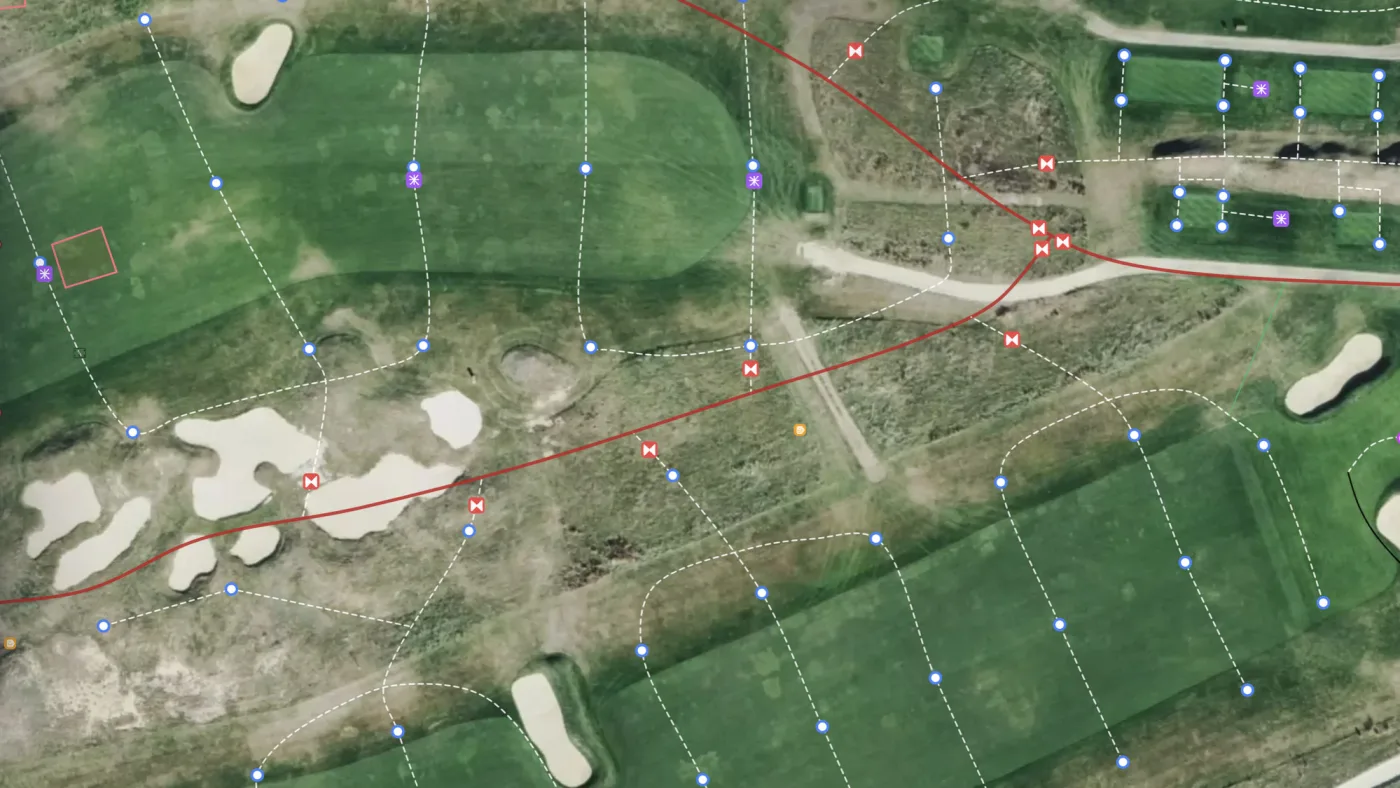
It was no surprise, then, that mapping and finding infrastructure was the single most common frustration people raised. The specifics kept repeating: finding valves and keeping up with irrigation repairs, mapping irrigation lines and heads, getting the whole course mapped from square footage down to the quick couplers. When a course’s as-built information is incomplete, outdated, or rolled up on paper in a shed, the real map is effectively whatever the irrigation tech remembers. Staff have to track down that person before they can find a valve.
What does all of this cost?
Lost time shows up in every one of these problems, so we put numbers to it using the hours and labor rates people reported.
Hours lost per week
Labor rate
Cost of lost time per year
Typical operation
5 to 10
$15 to $20
about $4,000 to $10,000
Higher end
40+
$20+
$40,000 or more
These are directional, built from self-reported numbers, but even the conservative end is a real, recurring line item. We show how to size it for your own course in what operational inefficiency actually costs every year. And it only counts time. It doesn’t count the costly mistakes that come from a wrong map or a task that got redone because it was never written down anywhere.
Do superintendents actually want a fix?
The large majority were open to testing a system that brings mapping, communication, and documentation into one place, and more than half said yes outright. For most operations, the map, the work orders, and the documentation are still kept in separate places, and much of the real record only exists in someone’s memory. Pulling them together is the obvious fix, and the appetite for it is clearly there.
Methodology
These findings come from an ongoing survey of golf course superintendents and turf managers. Responses are self-reported, so they’re best read as signals from people working in the field rather than a formal academic study. We’re still collecting responses and will update the numbers as more come in.
Frequently asked questions
How much operational knowledge do golf courses lose when an employee leaves? In Turfile’s 2026 survey, 40% of operations said they’d lose 25% or more of their operational knowledge if a single key team member left, and some estimated losing half or more.
How many golf courses have a reliable system to document their maintenance work? Only 13% reported a reliable system. Two thirds said they have no real system or rely on memory and paper.
How much time do golf course staff spend finding irrigation infrastructure? 40% of operations lose 5 or more hours a week locating buried infrastructure like valves, heads, and wiring, and some reported 10 to 20 hours.
What is the biggest operational frustration for golf course superintendents? Mapping and locating infrastructure, including finding valves, heads, and irrigation lines, was the most common frustration in the 2026 survey.
What does poor documentation cost a golf course? Based on self-reported hours and labor rates, lost time alone runs roughly $4,000 to $10,000 a year for a typical operation and $40,000 or more at the higher end, before counting the cost of mistakes.
This survey is run by Turfile, the map-based platform for golf course documentation, communication, and infrastructure tracking.