Shadow Comms: Why Nearly Half of Course Decisions Disappear Into the Group Chat

Informal channels keep a crew moving fast, but they are also where most course decisions get lost.
Nearly half of golf course operations, 47%, say more than three quarters of their daily communication happens through informal channels like group chat, the two-way radio, or a quick word in the parking lot. About 1 in 4 said nearly all of it does. That speed works well until somebody needs to check a past decision and nobody can find it.
Key takeaways
- 47% of operations run more than three quarters of their daily communication through informal channels, and roughly 1 in 4 push nearly everything that way.
- Only 7% of teams are very confident their crew is always aligned, while about 40% are not very or not at all confident.
- 87% of operations have no reliable system to document and reference past work; only 13% do.
- 40% would lose a quarter or more of their operational knowledge if one key person walked out the door.
- Better staff communication and easier access to information were among the most common frustrations turf managers reported.
What are shadow comms?
Shadow comms are the operational decisions and instructions that happen through informal, untraceable channels (group chat, radio, a word in the parking lot) and never get recorded anywhere searchable.
Think about how a normal morning actually runs. You change a mowing height over the radio, you text the spray tech to hold off because rain is coming, you tell the new guy at the cart barn to skip the back nine bunkers today. Every one of those is a real decision. None of them land anywhere you could go back and look later.
That is the shadow part. The instructions get communicated, but no record of them exists afterward.
Why does so much course communication happen this way?
Informal channels win because they are fast, and a busy crew at 5:30 a.m. does not have time for anything that slows the morning down.
There is nothing wrong with the instinct. A group chat is instant, everyone already has it on their phone, and the radio reaches the whole crew in one push. When you are trying to get eighteen holes ready before the first tee time, anything that adds extra steps gets skipped, and informal comms add almost none.
The trouble is that a group chat works well for immediate instructions and poorly as a long-term record. If you need to know what was decided about the eighth green three weeks ago, scrolling back through a chat thread rarely finds it. Messages are casual, they scroll away, and nobody logs them.
That is why nearly half of operations told Turfile that most of their communication happens through informal channels. It is the easiest option, and most courses never set up a separate system for keeping records.
What does it cost when decisions live in the group chat?
The cost shows up as missed tasks, repeated mistakes, and a crew that is rarely sure everyone is on the same page.
Start with alignment. When the plan only exists in a scroll of texts and a few radio calls, people fill the gaps with their own assumptions. You can see it in the numbers: only 7% of crews feel reliably aligned, and about 40% are not very confident or not confident at all. A double-cut gets skipped, a closed hole gets played anyway, or a chemical app gets doubled because two people each thought it was theirs. Those mistakes all trace back to a decision that nobody could check.
Then there is the part that hurts later. When 87% of operations have no reliable way to document and reference past work, every answer lives in somebody’s head instead of a place you can search. That is also how hard-won knowledge quietly disappears: 40% of operations say they would lose a quarter or more of their operational knowledge if one key person left. The group chat felt like a record, but it was really just that person’s memory typed out once and never stored anywhere searchable.
How do you keep the speed but capture the record?
You keep the group chat and also record the decisions that matter somewhere they can be found later.
The fix is not “stop using informal comms.” That would slow your crew down for no good reason, and they would ignore it anyway. The goal is to keep routine chatter in the chat while making sure anything that counts as a decision or a record (a height change, a closed area, a completed application, an issue on a green) also lands somewhere it can be found later.
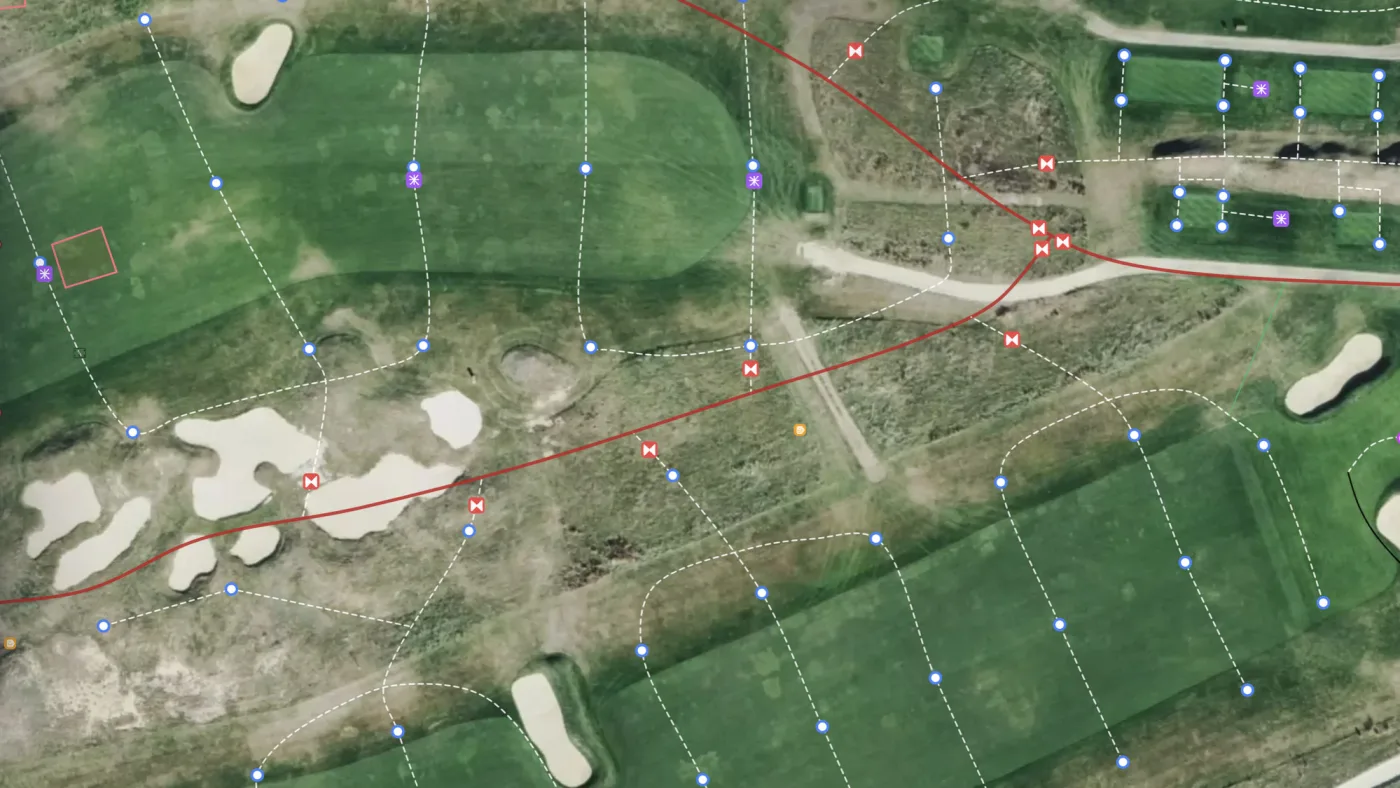
In practice that means tying the record to the place it happened instead of to a thread. A note pinned to the actual eighth green, attached to a work order or an issue on the map, is something the next person can walk up to and read. That note is still there after the chat scrolls on, after the season ends, and after your best assistant takes a job two states over.
The crew keeps its speed, and the important decisions stop getting lost.
Frequently asked questions
What is the difference between shadow comms and normal team communication? Normal team communication includes anything you say to coordinate the crew, while shadow comms are specifically the decisions and instructions that happen on informal channels and never get recorded anywhere you can search later.
Are group chats and radios bad for a maintenance crew? No, informal channels are fast and natural for a busy crew, and 47% of operations rely on them for most communication; the problem is relying on them as the only record.
How does informal communication affect crew alignment? When decisions live only in chat and radio, people fill the gaps with assumptions, which is one reason only 7% of crews are very confident they are always aligned.
What happens to all that information when someone leaves? Roughly 40% of operations say they would lose a quarter or more of their operational knowledge if one key person left, because much of it was only ever shared through untraceable channels.
These figures come from an ongoing Turfile survey of golf course superintendents and turf managers. Responses are self-reported, so treat them as signals from the field rather than a formal study.
None of this needs to slow your crew down. Turfile is built to keep the decisions your crew makes every morning findable later, without adding friction to the channels they already use.