How to Find Buried Irrigation Valves and Heads Without Losing Your Morning

This is a working tech’s guide to locating buried valves and heads fast, and to recording them so you never have to search for the same one twice.
A Turfile survey found that 40% of operations lose 5 or more hours a week just locating buried infrastructure like valves, heads, and wiring, and some report losing 10 to 20 hours. Every irrigation tech knows how that happens: you head out for a quick repair and spend most of the morning finding the valve before you can start the actual work.
Key takeaways
- 40% of golf course operations lose 5 or more hours a week locating buried infrastructure, and some lose 10 to 20 hours.
- Finding valves and keeping up with irrigation repairs was the single most common frustration superintendents and turf managers reported.
- Only 13% of operations have a reliable system to document and reference past work, which means 87% are re-discovering their own systems repeatedly.
- A wire-and-valve locator that energizes the solenoid is the fastest electrical method for pinpointing a buried valve.
- The lasting fix is marking and documenting every valve the moment you find it, by GPS or a mapped record.
Why is finding a buried valve so hard?
Buried valves go missing because the people who installed them are long gone and nobody wrote down where they went.
A buried irrigation valve is a flow-control device that opens and closes a zone, usually sitting in a valve box below grade, often with a solenoid wired back to the controller. The problem is rarely the valve itself. It’s that grass grows over the box lid, sod gets laid across it, a cart path expands, or an old as-built drawing was never updated after the last three renovations.
Crews turn over, and knowledge of the system leaves with them. The guy who knew that the 14th fairway isolation valve sits “about ten feet off the back of the bunker” retired two seasons ago, and now you’re out there with a probe and a hunch. That’s why mapping and finding infrastructure came up as the most common frustration in the field, with finding valves named again and again.
How do you actually locate a buried irrigation valve or head?
Work from the most reliable information you have down to physical searching, and use an electrical locator before you ever break ground.
Here’s the order a sharp tech actually works in:
- Check the as-builts and system maps first. Before you walk outside, pull whatever drawings, record plans, or maps exist. Even an outdated print narrows the search area and saves you blind probing.
- Use the controller and station numbering. Your controller knows which station feeds which zone. Activate the station, then listen and look for the head or zone that responds. This tells you which valve you’re hunting for and roughly where it lives.
- Trace it electrically with a wire and valve locator. This is the fastest method for a valve with a working solenoid. Connect the locator to the valve wire at the controller or a known splice, energize the solenoid, and follow the signal across the ground to the valve. A locator follows the path of the wire, so it leads you right to the box.
- Sweep with a metal detector. For brass valves, metal lids, or metal components, a metal detector picks up what a wire trace can’t, especially on older systems or dead solenoids where there’s no signal to follow.
- Probe carefully. Once you’ve narrowed it to a few feet, use a soil probe to feel for the box lid or the valve body. Go slow. A probe driven hard can crack a lid, nick a wire, or punch a fitting.
- Read the surface clues. Settling or a slight depression often marks an old box. Greener or browner turf can flag a leak or a buried head. Look for old lid edges, consistent sprinkler spacing, and the logic of how the original installer would have run the line.
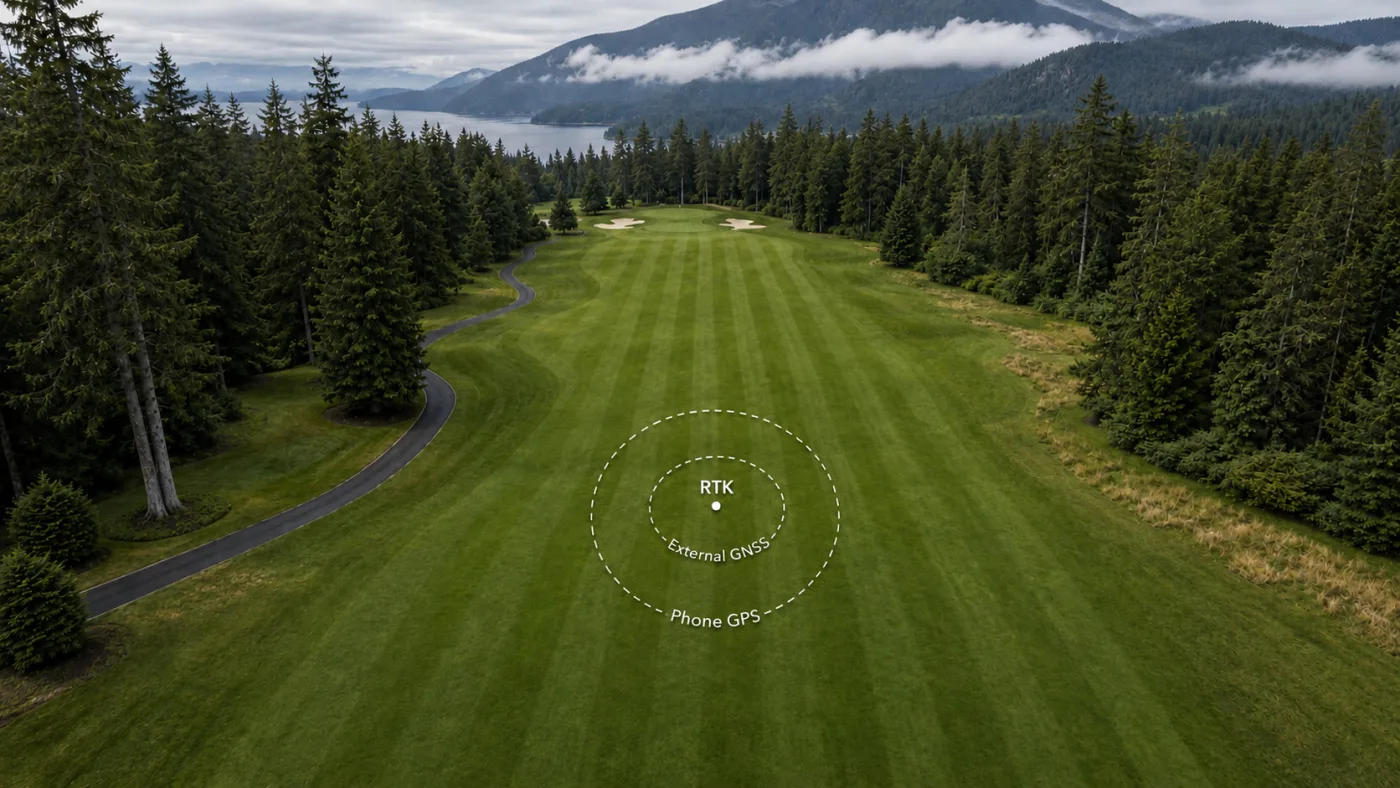
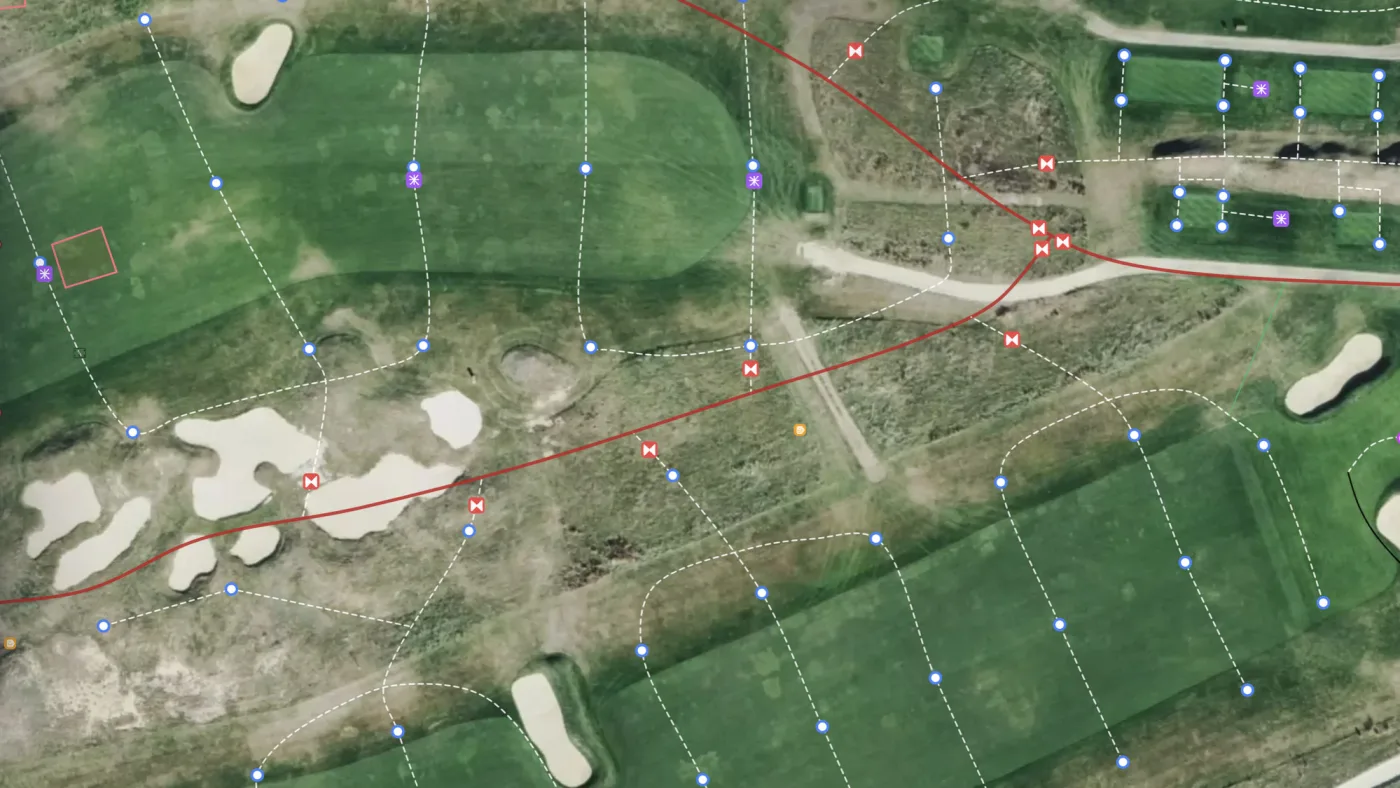
- Mark and document it the instant you find it. Drop a GPS point or log it on a mapped record before you backfill. Once the location is recorded, nobody has to search for that valve again.
That last step is the one most crews skip, and it’s the reason the same valve gets “lost” every few years.
How much time does this cost over a season?
At five lost hours a week, the searching adds up to several full work weeks a year.
Run the math. Five hours a week across a 30-week season is 150 hours, and that’s the low end. The operations losing 10 to 20 hours a week are giving up a half to a full day of skilled labor every week just to locate equipment. During peak repair season, when a stuck valve means a flooded green or a dry approach, those hours come straight out of repair and maintenance time.
It compounds, too. Only 13% of operations have a reliable way to document and reference past work, so at the other 87%, what gets learned during a repair is not saved anywhere. The tech who found that valve in May is searching for it again in August, because the location was never written down or mapped.
How do you stop losing the morning to it?
Document each location once, in a place the whole crew can see, so nobody has to search for it again.
The methods above will find the valve, but they won’t stop the same search from happening again next season. What stops the repeat searches is recording where things are as you go, and the permanent fix is a current as-built map of your system that gets updated every time you open the ground.
That means a shared, mapped record instead of a binder in a drawer or one person’s memory. When the location of every valve, head, and splice is stored somewhere the whole team can pull up in the field, finding one takes about 30 seconds on your phone instead of a 90-minute hunt. You only have to find each valve once, because after that anyone can look it up.
Frequently asked questions
What is the fastest way to find a buried irrigation valve? The fastest method for a valve with a live solenoid is to connect a wire and valve locator at the controller, energize the solenoid, and follow the electrical signal across the ground to the box.
How do you find a valve when the solenoid is dead and there’s no signal? When there’s no working solenoid to energize, sweep the suspected area with a metal detector to pick up brass or metal components, then confirm with a careful soil probe.
Can you locate an irrigation head without digging? Yes, you can usually locate a head by activating its station at the controller and watching for the zone that responds, then reading surface clues like spacing patterns and greener or browner turf.
Why do crews keep losing the same valves? Crews keep losing the same valves because most operations have no reliable system to document past work, so a valve found one season has to be rediscovered the next.
These figures come from an ongoing Turfile survey of golf course superintendents and turf managers. Responses are self-reported, so treat them as signals from the field rather than a formal study.
If your crew is spending mornings searching for valves you already paid to install, irrigation mapping in Turfile is built to record those locations so the whole team can find them.