The Tribal Knowledge Tax: What Walks Out the Door When Your Best Person Quits

When one person carries the whole operation in their head, everything they know leaves with them the day they resign.
Roughly 40% of golf course operations say they would lose a quarter or more of their operational knowledge if a single key person left, and a chunk of those said they would lose half or more. That is a documentation problem, even though it usually gets treated as a staffing problem.
Key takeaways
- 40% of operations would lose 25% or more of their operational knowledge if one key person walked out the door, and some put the loss at half or more.
- 87% of operations have no reliable system to document or reference past work. Only 13% do.
- Onboarding a new staff member already averages around 18 hours, and most of that time is spent transferring knowledge that was never written down.
- 47% of operations say more than three quarters of daily communication happens informally, through group chat, radio, and word of mouth.
- Finding and mapping infrastructure (valves, irrigation lines, heads) is the single most common frustration superintendents report.
What is tribal knowledge, and why is it a problem on a golf course?
Tribal knowledge is the operational know-how that exists only in someone’s memory and is not documented anywhere others can find.
The assistant knows the third valve on number seven is buried two feet left of where the as-built says it is. The mechanic can tell a bad bearing by sound. The spray tech remembers that the back nine drains funny after a hard rain, so you skip the wetting agent on those greens.
None of that is written down. When that person takes a job at the club down the road, the knowledge goes with them. On a golf course this hurts more than in most workplaces, because so much of the operation is physical, buried, and seasonal. You cannot Google where your own irrigation lines run.
How much does a course lose when a key person leaves?
Most of the loss is invisible until you need the information and nobody can produce it.
The headline number is real enough: 40% of operations told Turfile they would lose a quarter or more of their knowledge if one person left. But the cost is spread across many small failures rather than one event.
You dig in the wrong spot because the only person who knew the right spot is gone. A mistake from three seasons ago gets repeated because its history left with the guy who made it. Vendor relationships get rebuilt from scratch because nobody documented the account, the pricing, or the quirks.
And it shows up every time you train someone new, which already averages around 18 hours. When the person doing the training is also the only one who knows the answers, training takes longer and the exposure grows.
Why is turf so exposed to this?
The knowledge is mostly verbal, and there is rarely a system that captures it.
Start with the communication itself. 47% of operations say more than three quarters of their daily communication is informal: group chat, radio, word of mouth. That works fine until the person on the other end of the radio quits. Much of that knowledge never gets written down because it lives in the group chat and on the radio, and a group chat is not a record anyone can search two years later.
Then there is the infrastructure problem. Finding and mapping things, valves, irrigation lines, heads, is the most common frustration superintendents report. That information is buried in the ground, and the record of where it sits is often only in one person’s memory.
And it compounds. 87% of operations have no reliable system to document or reference past work. So even the courses that want to capture what their best people know often have nowhere consistent to put it.
How do you defuse the tribal knowledge tax?
You move the knowledge out of one head and into something the whole team can find without asking.
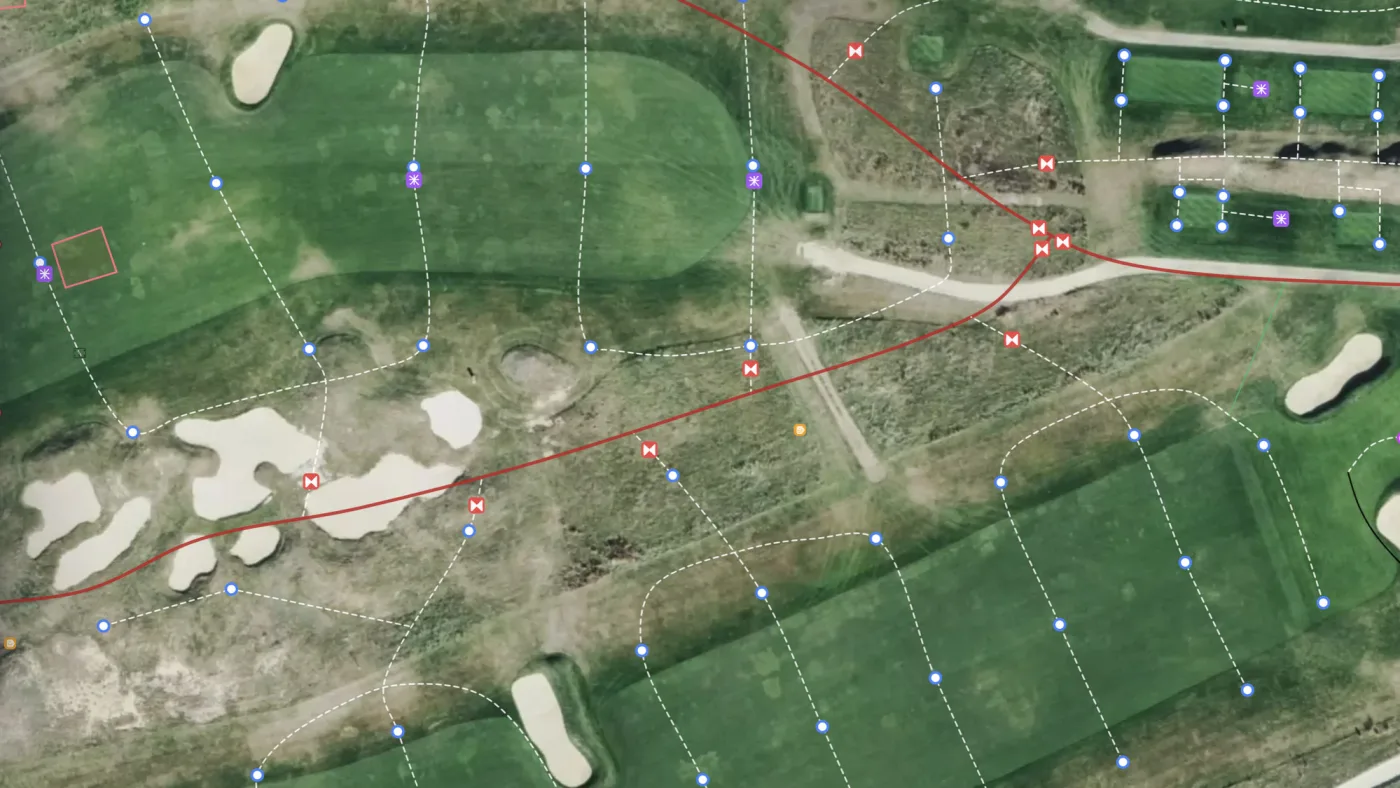
Start with what hurts most when it disappears. For most courses that is infrastructure, so map it. Get valves, isolation points, controller wiring, and head locations onto something visual and shared instead of a binder in a drawer.
Then record the reasoning behind the work as well as the work itself. A note that says “skip wetting agent on the back nine greens after heavy rain, drainage is slow” is worth more than a clean map with no context. Tie those notes to the place they apply, so the next person finds them when they are standing in the right spot.
Finally, make documenting a quick, routine step. If logging a fix or a quirk takes thirty seconds and lives where the next person will look, it gets done. If it requires a memo and an email thread, most people will skip it. You do not need a perfect manual, just enough of a system that no single resignation can erase a quarter of what your operation knows.
Frequently asked questions
What does “tribal knowledge tax” mean? The tribal knowledge tax is the ongoing cost a course pays when critical operational know-how lives only in individual memories, paid through lost history, slower onboarding, and repeated mistakes whenever those people leave.
How much knowledge does a course actually risk losing? About 40% of operations say they would lose a quarter or more of their operational knowledge if one key person left, and some estimate they would lose half or more.
Why don’t superintendents just write everything down? Most don’t have anywhere reliable to put it: 87% of operations report having no consistent system to document or reference past work, so knowledge defaults to memory and informal channels.
What is the first thing to document? Start with whatever causes the most damage when it disappears, which for most courses is infrastructure, since finding valves, irrigation lines, and heads is the single most common frustration superintendents report.
These figures come from an ongoing Turfile survey of golf course superintendents and turf managers. Responses are self-reported, so treat them as signals from the field rather than a formal study.
The fix is to make sure that when your best people do leave, the rest of the team still has access to what they knew. Turfile is built to hold that kind of shared, mapped, searchable record. The Wisconsin Country Club is one club already preserving course knowledge this way.