Why Tree Management Software in Golf Is Broken
Walk onto most golf courses and ask how they manage their tree inventory.
You’ll usually hear one of two answers: “We have a spreadsheet somewhere,” or “We tried a system, but no one really used it.”
The second answer is the more revealing one. Superintendents care a lot about their trees. Trees affect playability, turf health, drainage, sunlight, and safety. The problem is the tools we’ve been given to manage them.
Most tree management software was built for municipalities
The tree management software on the market was built for city forestry departments and arborist companies managing thousands of street trees. It’s designed around compliance requirements, regulatory reporting, and deep data layers that a municipal program needs.
Drop that into a golf course operation and it doesn’t fit. It’s too complex for a crew to pick up, too slow to use in the field, and too expensive to justify: usually five thousand dollars a year and up, for a tool that sits apart from everything else you manage. It’s solving a different problem than the one you have.
How tree decisions actually happen on a course
Think about how tree calls really get made. You’re out on the property with your crew, making decisions in real time. The calls are things like “take this tree out,” “thin this area to get airflow onto the green,” or “what did we do here last year, and did it work?”
These decisions are visual, fast, and made on the ground. Software built for a desk in a city forestry office doesn’t fit that, so the same cycle repeats: the course buys a system, logs a few trees, and then stops using it while the subscription keeps getting paid. If a tool is clunky in the field, the crew stops using it, and then the records end up split between an abandoned system and everyone’s memory.
The real cost is lost knowledge
Tree work happens every year. Removals, pruning, storm damage, problem areas that get watched season after season. On most courses, almost all of that lives in conversations instead of records.
So when staff changes, that knowledge goes with them, and when a member or a board asks why a tree came down, there’s no documented answer. A new superintendent taking over the property gets no record of the tree work that came before. We’ve written before about the hidden knowledge problem in golf, and trees are one of its worst cases, because tree decisions draw more scrutiny than almost anything else a superintendent does.
What tree software for golf should look like
Tree management on a golf course needs to be simple, visual, and collaborative, and it needs to work standing next to the tree.
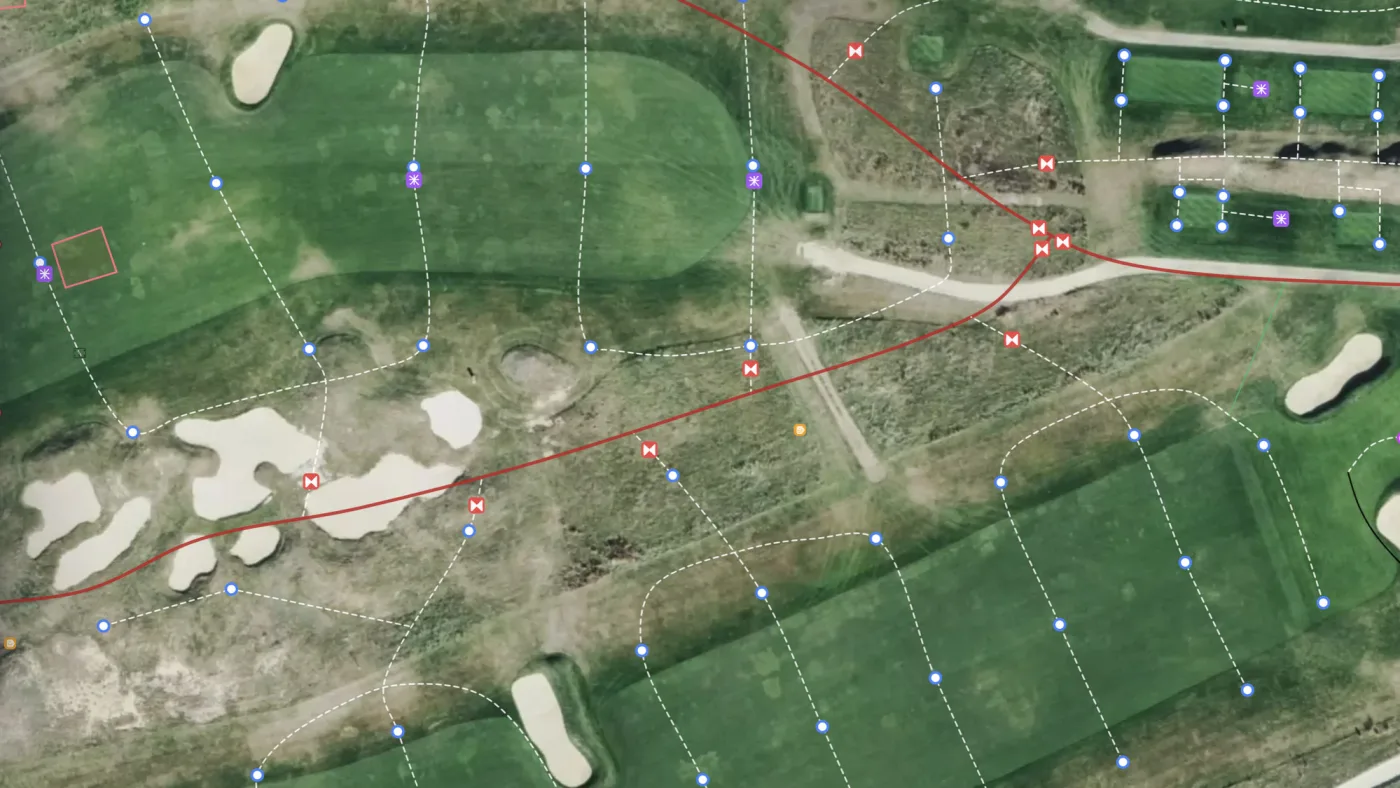
That’s what we built into Turfile. Tree inventory is part of the same map your crew already uses for irrigation, drainage, and bunkers, not a separate system:
- Add a tree from your phone by dropping a pin where you stand, and pull its species from a database of more than 3,000, so records come out clean and consistent.
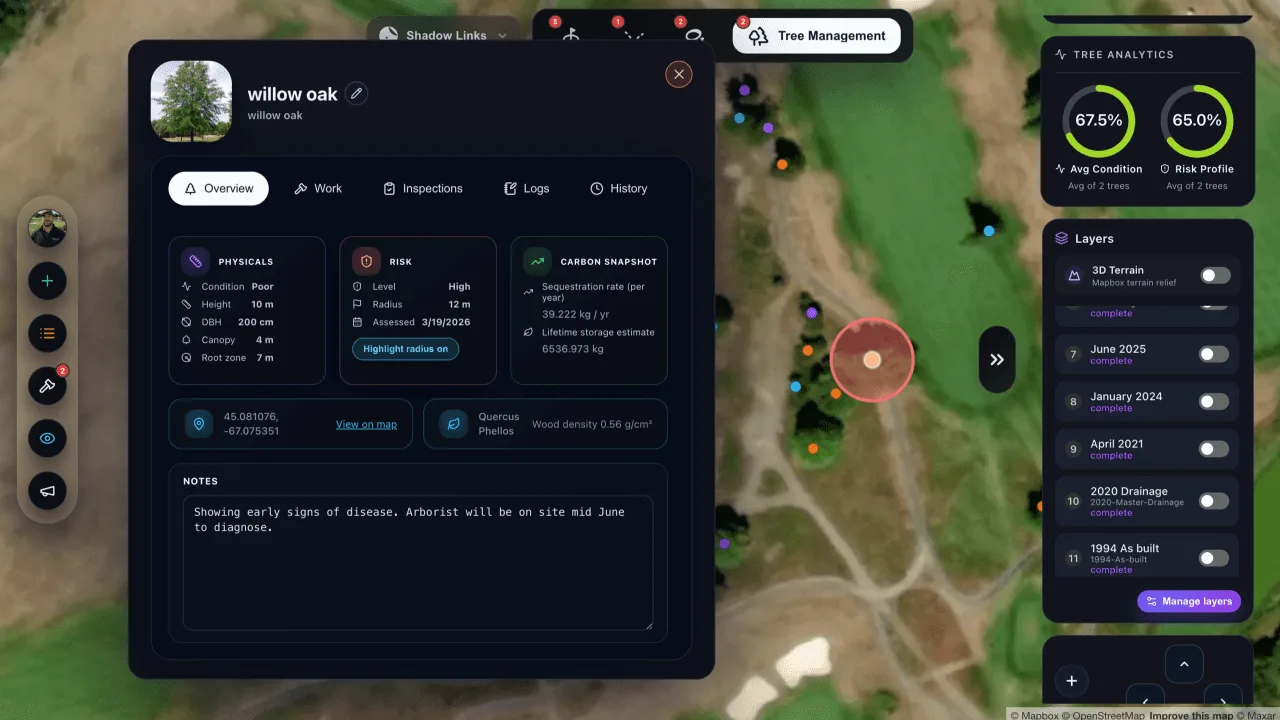
- Record what matters: height, trunk diameter, condition, photos, and a recommended action, captured in the field in a minute or two.
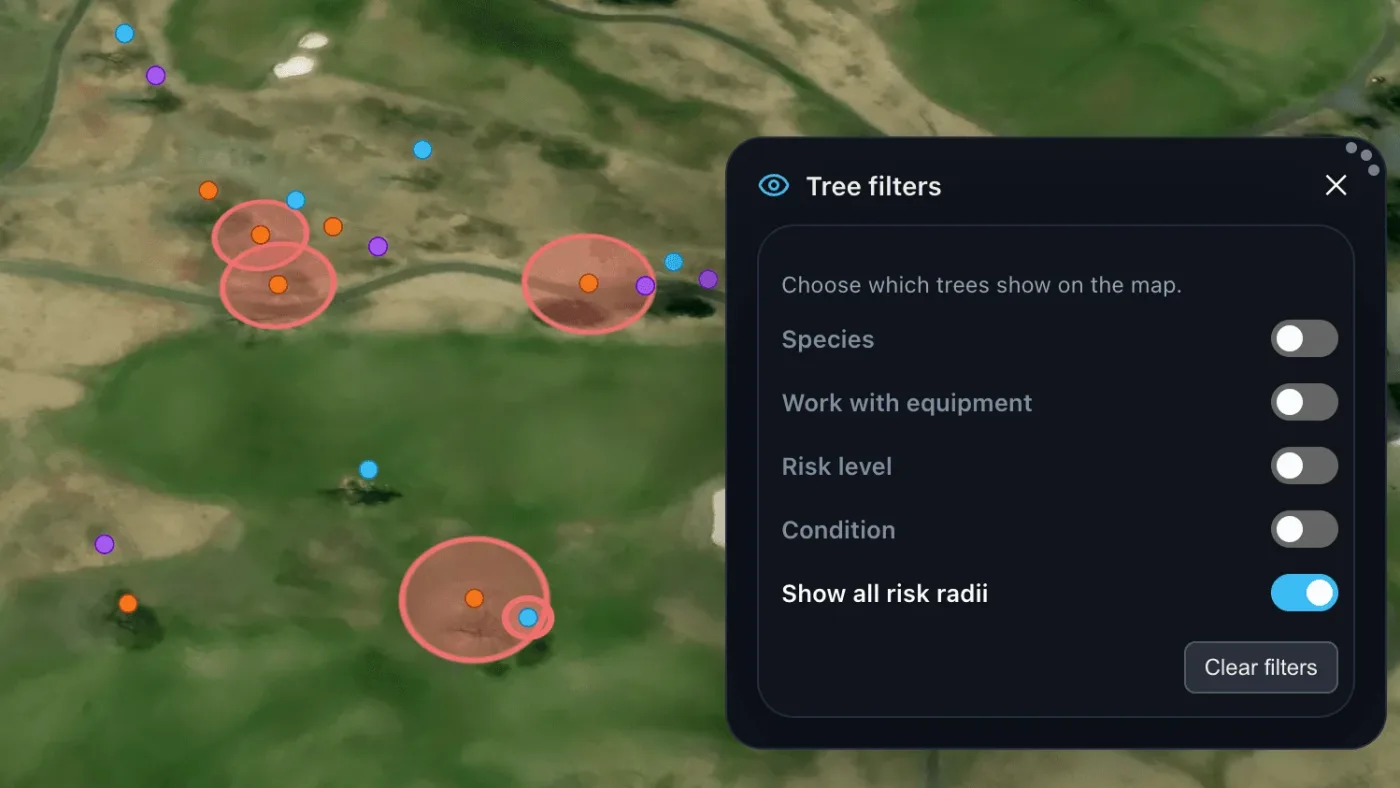
- Track hazard trees properly. Give any tree of concern a risk radius and its impact zone appears on the map, showing exactly what it could reach. Filter the map to just your hazard trees when it’s time to plan removals.
- Build the history as you work. Every inspection, pruning, and removal gets logged on the tree itself, so the records stay with the property no matter who’s on staff.
And because it’s included in Turfile rather than sold as a separate platform, the five-figure standalone bill goes away entirely.
The board conversation changes
Here’s where the record pays for itself. Tree removals get questioned, and tree budgets get challenged. When you manage trees from a documented map, you can present the plan directly from it: this tree’s condition scores, its photos over three seasons, and its fall zone reaching the cart path.
Instead of defending a judgment call from memory, you walk decision-makers through evidence, and a recommendation backed by a documented record is a much shorter conversation.
If you want to see how it works in practice, our guide on how to build a tree inventory for your golf course covers the workflow, and the tree management docs walk through it step by step.