The hidden cost of poor communication

We recently ran a survey with superintendents to better understand where time is actually going on the property.
Here’s what it came down to:
On average, superintendents feel they’re losing 10, 15 hours a week across their team.
Here’s what that looks like day to day:
There is rework because something wasn’t clear the first time, and the team is not fully on the same page. Time also goes into searching for past photos, notes, or documentation, and trying to locate infrastructure like valves, heads, or lines.
A lot of other small things add to that, and none of them seem like a big deal on their own. They’re constant, easy to brush off, and part of the routine, so you deal with each one and move on. Added up over a week or a season, they account for a significant amount of lost time.
One thing that stood out looking through these results is that we don’t have a data problem in the industry. If anything, we have more information than we know what to do with: moisture data, playability, plant health, metabolic trackers, weather analysis, drone technologies, etc.
Where things break down is how information actually moves across the property and through the team.
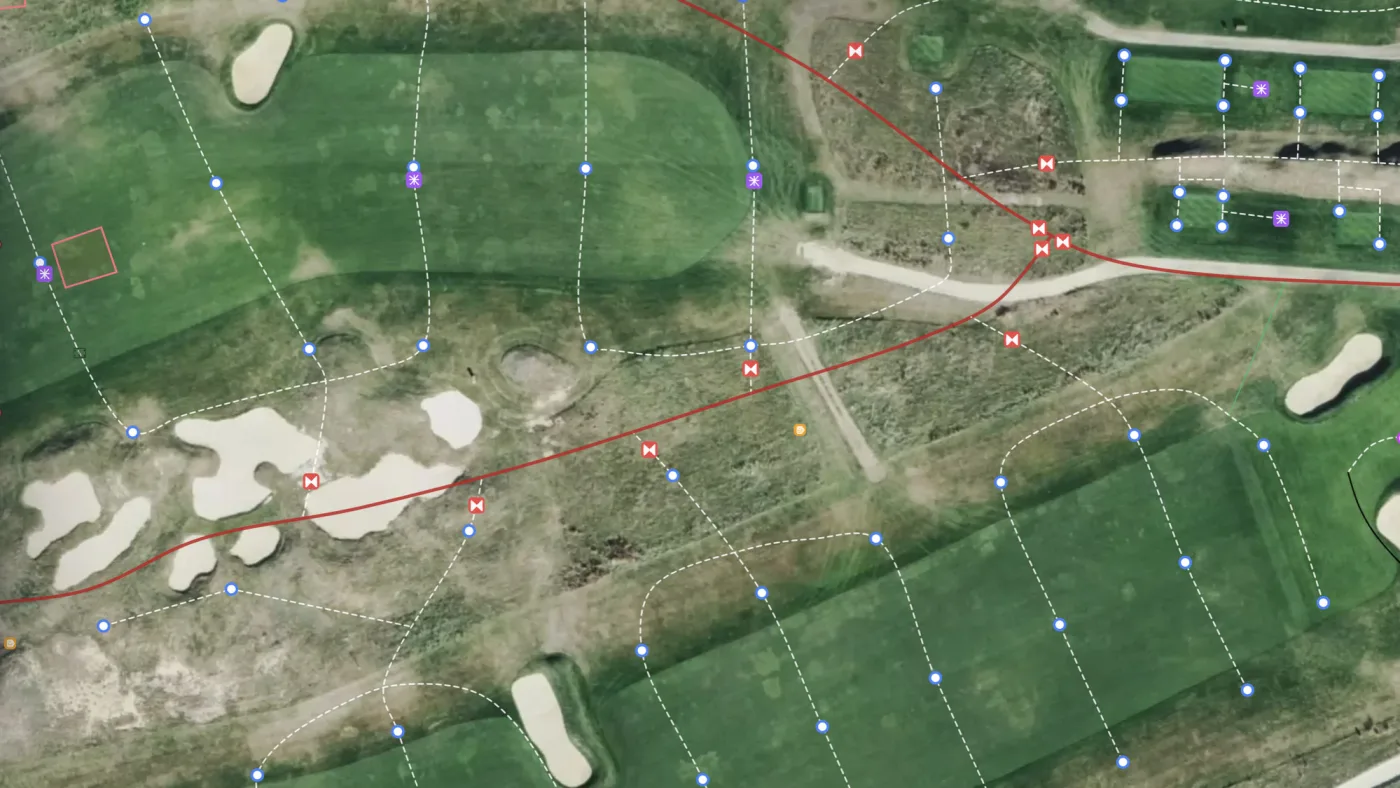
Everything we do is tied to a location: where something was noticed, where work was done, where that member complained, where you sent someone that morning. The location is the context, and without it information loses most of its value.
In reality, that context is lost all the time. It gets passed around in pieces: a text message, a screenshot, a quick conversation, or something sitting in your camera roll from a few weeks ago. That works in the moment, but the information doesn’t stay usable. When you come back to something later, you end up figuring it out again instead of picking up where you left off.
Another thing that came up in our survey:
Most superintendents felt they would lose at least 10% of their property knowledge if a key staff member left…
That’s experience as much as information: what’s been tried, what actually worked, what didn’t, and where that valve actually exists. A lot of it still lives in people’s heads, and when those people leave, the knowledge goes with them.
There’s no lack of effort on our golf courses.
Crews work hard, but the system around the work is still messy.
The shift is pretty simple: tie communication directly to the property itself.
When notes, photos, tasks, and history are all connected to a location, things stop getting lost, and communication becomes effortless.
That’s what we’re building with Turfile: a simple way to keep everything and everyone connected, with one map as the single source of truth.