The Hidden Knowledge Problem in Golf
We recently analyzed survey data from golf course superintendents, and one number stood out:
On average, superintendents estimated 31% of operational knowledge is locked inside the heads of senior staff.
At first glance, that feels high. But when you look at how golf courses actually operate, it starts to make sense.
Why So Much Knowledge Stays in People’s Heads
Golf course maintenance runs on experience.
Many of the most important decisions are not written down anywhere. They come from pattern recognition built over years:
- How a specific green reacts after heavy rain
- Which fairways dry out first in the summer
- Where disease tends to show up and when
- What has been tried before and what actually worked
This kind of knowledge is highly contextual and tied directly to the property.
That is the real issue. It does not live in a system that reflects that context.
Why It’s Hard to Capture
Most tools used today are not built for how this work actually happens.
Information ends up scattered across:
- Spreadsheets
- Notes
- Paper binders
- Or just memory
Even when something is recorded, it often loses meaning over time:
- “Adjusted irrigation” where?
- “Treated for fungus” which area?
- “Problem spot” relative to what?
Without location, the insight becomes harder to interpret and even harder to reuse.
A More Natural Way to Capture Knowledge
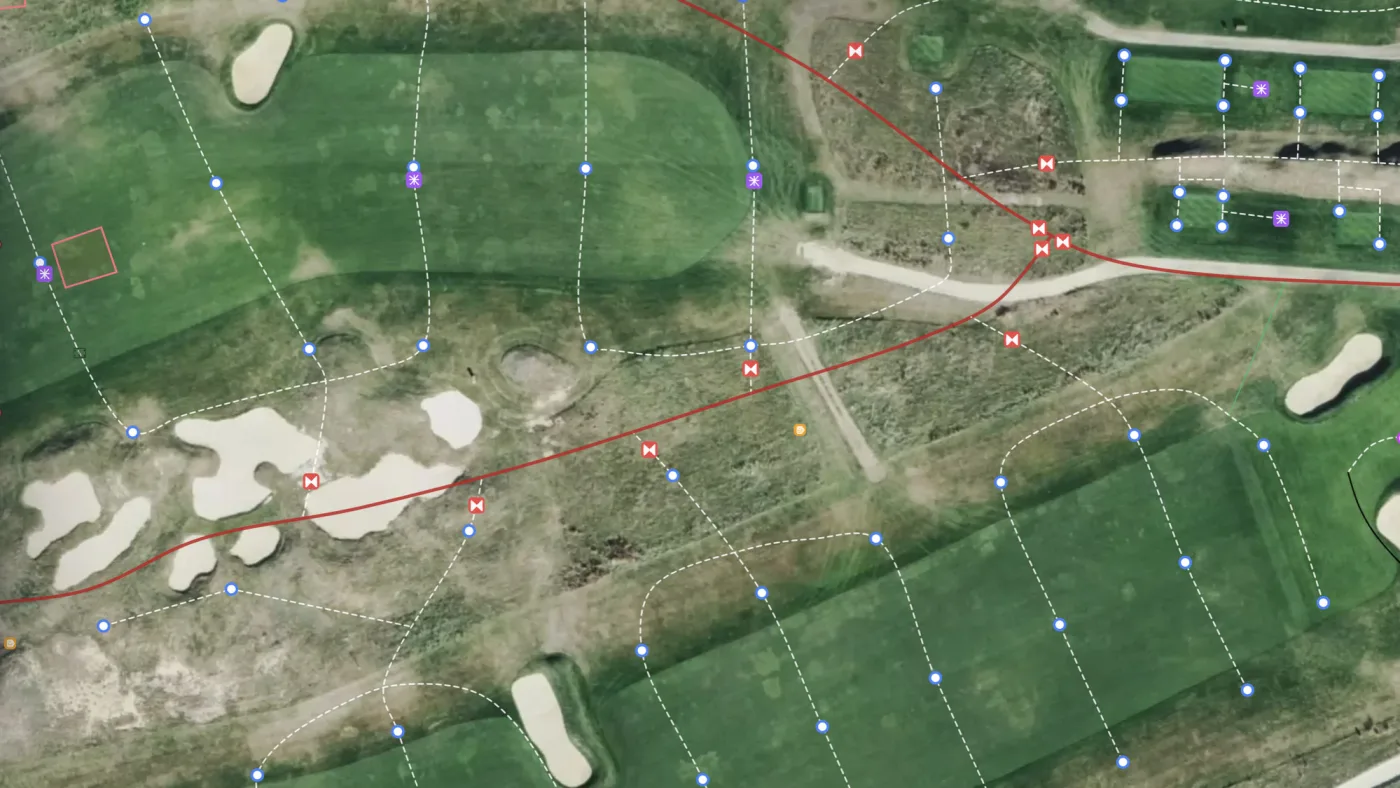
Golf course operations are inherently spatial, so the system of record should be spatial too.
Instead of forcing everything into generic tools, a better approach is to capture information directly on the map:
- Log activities tied to specific greens, fairways, or zones
- Record what was done, when it happened, and what the conditions were
- Build a visual history of the course over time
The knowledge is anchored to the ground it actually relates to, so it keeps its meaning over time.
That changes how it gets used:
- New staff can quickly understand what has happened in a specific area
- Patterns become easier to spot
- Past decisions are easier to learn from and repeat
Where Turfile Fits
This is exactly the problem we are focused on with Turfile.
Turfile is built around the idea that golf course operations should be managed spatially. Instead of disconnected records, everything is tied back to the map of the course.
The goal is to make operational knowledge visible, structured, and easy to access in the context it was created, without adding more documentation work.
Final Thought
That 31% number is not surprising. It reflects how experience-driven this industry is.
The opportunity is to capture that experience in a way the entire team can use.
The more of that knowledge you can tie to the property itself, the less of it disappears over time.