How Kamloops Golf & Country Club is Mapping for the Future
One of the biggest challenges in golf course management isn’t always doing the work. It is coordinating and documenting the work across the property.
We recently had the chance to hear from Nathan Hagel, Superintendent at Kamloops Golf & Country Club, about where he sees technology making a practical difference for turf teams.
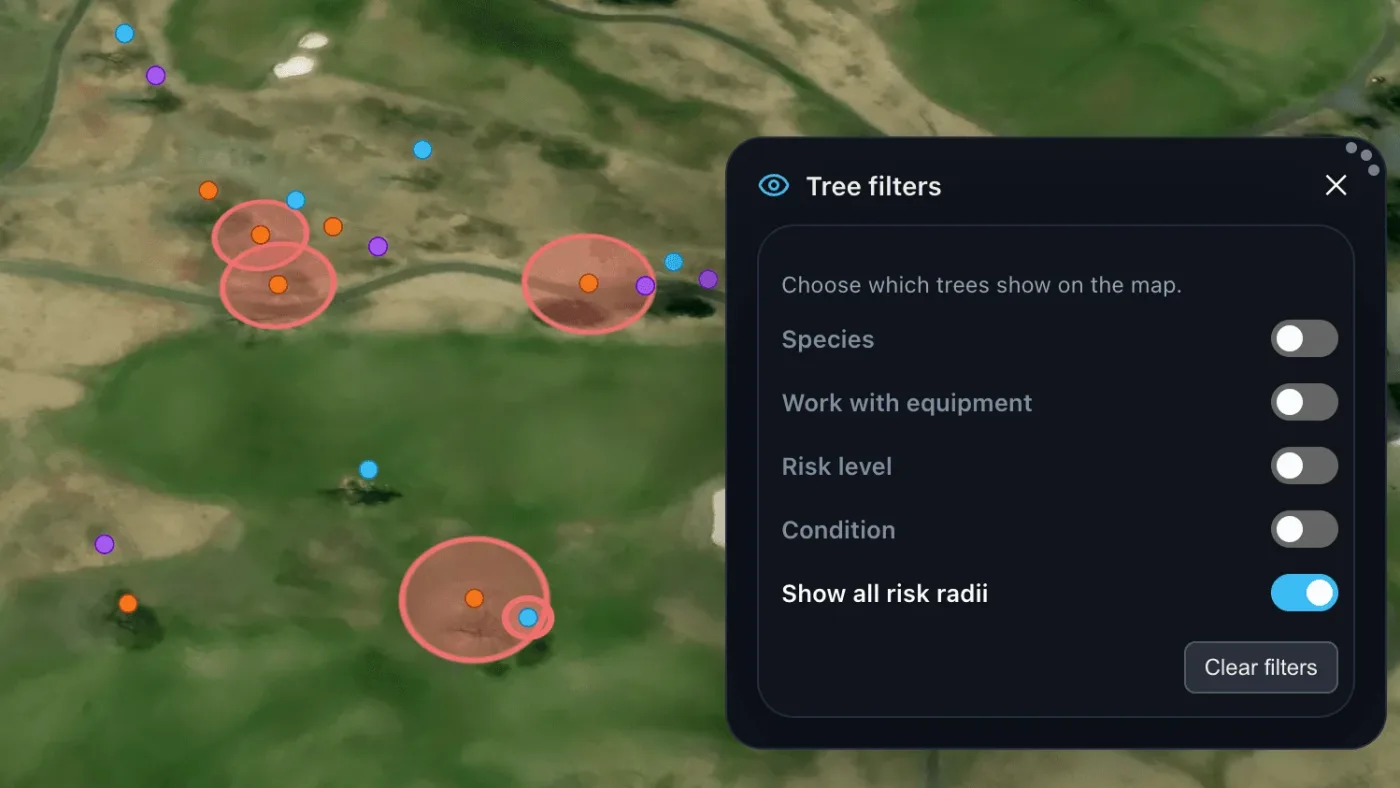
Nathan’s connection to the club goes back to 2019, when he started at Kamloops as an Assistant Superintendent. After spending time as the Superintendent at Mt. Paul Golf, he returned to Kamloops in 2024 to assume the Superintendent role. He is now using Turfile to map and organize the club’s tree inventory.
When asked what type of course information is hardest to keep organized over time, his answer was one that likely resonates with most:
“Irrigation is always one of the most challenging areas. During the busy season, it can be difficult to find the time to properly document repairs or additions.”
Irrigation work happens fast.
A head gets changed, a valve gets located, a repair gets made, all with every intention of documenting it properly later.
But the season keeps moving, and before long important information ends up scattered across memory, old maps, text messages, or simply with the person who was there when the work happened.
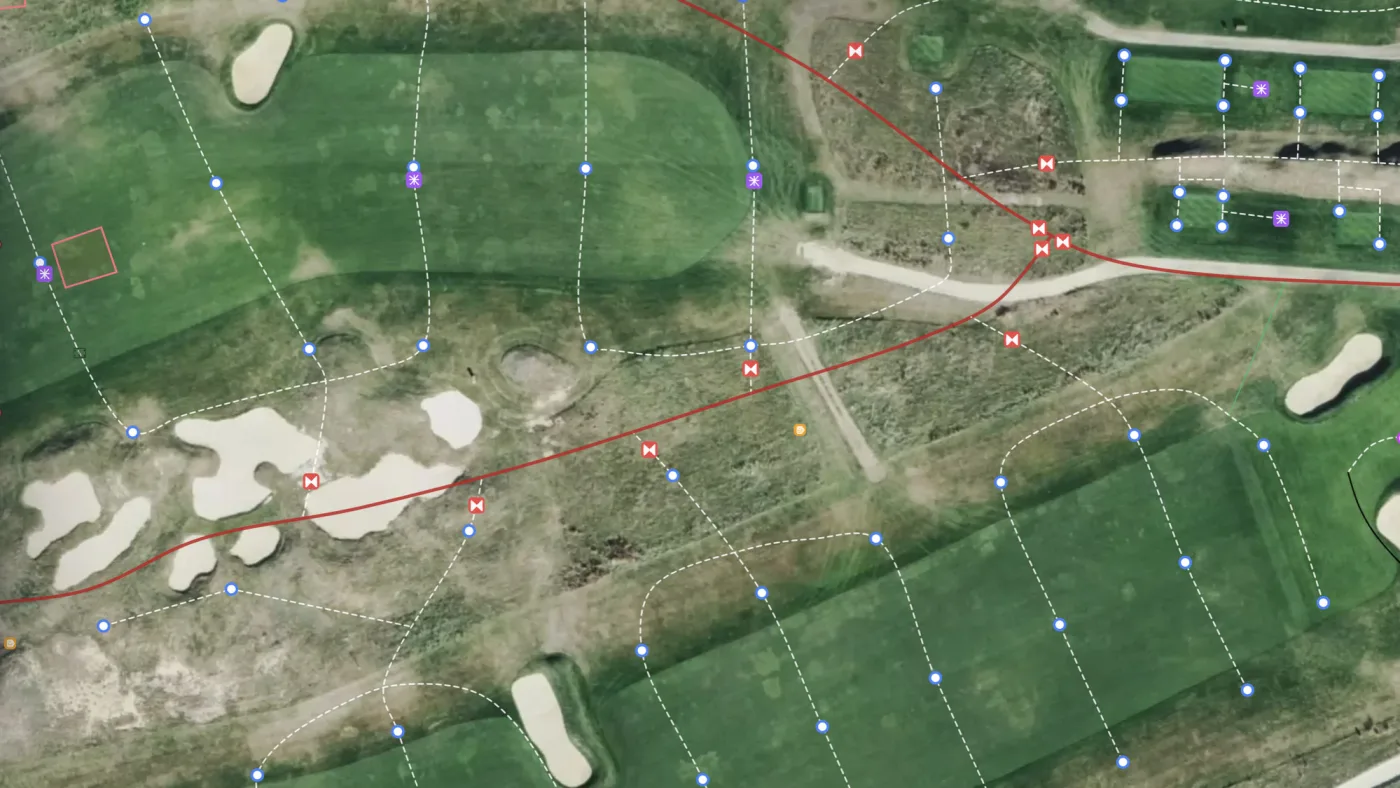
This is one of the strongest arguments for why map-based communication is becoming so important in golf course management. Information becomes much more valuable and usable when spatial context is preserved.
Nathan put it simply when asked why visual communication on a map is useful:
“It allows you to show someone the exact location you’re referring to rather than trying to explain it. This removes guesswork and improves clarity.”
On a golf course, almost everything we do has spatial context attached to it.
The way we think, share ideas, communicate with staff, and explain work to stakeholders is usually tied to a specific place on the property.
“We need to trim this high-profile area before the event.”
“Where is the main isolation valve for 14 fairway again?”
“A member complained about sand depth in the front-left bunker on 7.”
“This tree should be monitored over the winter.”
All of these conversations point to a specific location on the property.
When course information is kept on a map, that context is preserved, and the information is easier to find and pass on over time.
For turf teams, this can make a practical difference in a handful of key areas:
- Documenting repairs and additions
- Building a living asset inventory
- Helping staff understand exactly where work needs to happen
- Keeping photos, notes, and history connected to real locations
When asked why mapping technology will make a difference over the next few years, Nathan pointed back to this fundamental idea:
“It improves clarity and documentation across the board, eliminating guesswork for both staff and stakeholders.”
At its core, that is exactly what Turfile is being built around.
Every golf course carries years of knowledge, including repairs, observations, projects, problem areas, and small details that often live in old maps, photos, or someone’s memory.
The goal is to make that knowledge easier to capture, find, and pass on without creating more admin work.
It is so encouraging to see superintendents like Nathan think deeply about their on course efficiency and record keeping.
Not only is he improving clarity for his team today, but is building a clearer, more organized record of the property for the teams that follow.
We are grateful for Nathan’s support and feedback, and have no doubt future teams at Kamloops Golf & Country Club will benefit from the records he is building.